
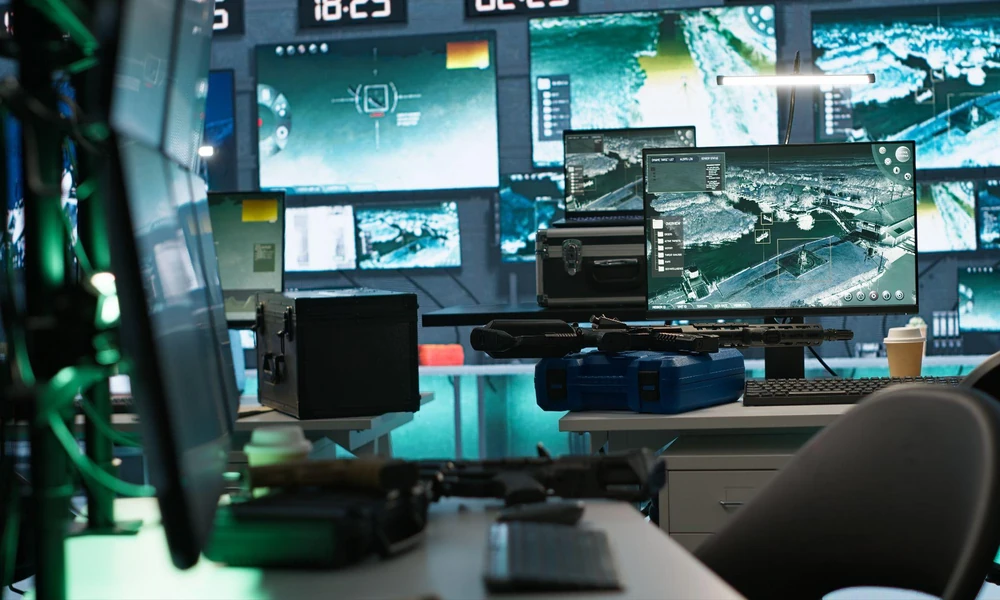
Remote integration has moved from novelty to routine for a substantial range of productions, and it is not the right answer for everything. The model shifts most of the production crew and equipment off site and concentrates them in a central facility, which saves considerably on travel and on-site footprint while placing everything on a connectivity link that has to hold. Whether that trade works depends on the venue, the show, and how much risk the production can absorb. Four factors determine whether REMI production suits a given event.
1. Connectivity at the Venue and What Backup Exists
This is the factor the model stands or falls on. Remote production depends entirely on a reliable, sufficient connection between venue and production facility.
Assess the venue’s actual available bandwidth, not what the venue claims, and establish whether it is dedicated or shared with everyone else in the building. Ask what redundancy is in place: a second path, a different provider, bonded cellular as backup, and what the failover process actually is.
Where a venue cannot provide adequate connectivity with genuine redundancy, the model is unsuitable regardless of its other advantages, and that assessment belongs at the earliest stage rather than during setup week.
2. Crew Travel, Accommodation, and On-Site Footprint
The savings concentrate here. A traditional outside broadcast involves transporting a vehicle, equipment, and a full crew, with accommodation and subsistence for the duration.
Remote production sends a small on-site team handling cameras, audio capture, and local technical support, while direction, vision mixing, replay, graphics, and audio mixing happen centrally. For events at distance, or for a series of events across a season, that difference is substantial.
It also reduces the space required at the venue, which matters where parking for an outside broadcast vehicle is limited or where the venue charges for it.
3. Latency and What the Production Actually Requires
Remote operation introduces delay between what happens at the venue and what the production team sees, and whether that matters depends on the show.
For a presentation, a conference, or a controlled programme, it is generally manageable. For fast-moving live sport, complex multi-camera direction, or anything requiring tight interaction between director and camera operators, latency affects how the production is cut and needs accounting for how the team works.
Any professional audio visual provider offering this model should be able to state the expected latency for your specific configuration and explain how direction and communication are handled around it, since a vague answer here usually means they have not run the configuration you are asking about.
4. Complexity of the Production and How Much Can Be Centralised
Simple productions with a handful of cameras and a predictable run of show suit the model well. Complex productions with many sources, extensive on-site integration, multiple feeds, and significant in-venue elements are harder to centralise entirely.
Many productions end up hybrid, with some functions remote and others on site, which captures part of the saving while keeping on-site what genuinely needs to be there. Deciding which functions sit where is a planning conversation rather than a binary choice.
Running a Technical Rehearsal on the Actual Link
Whatever the model, the essential step is testing the full chain on the actual venue connection well before the event, under conditions resembling the show rather than an empty building.
That rehearsal surfaces bandwidth issues, latency behaviour, and failover performance while there is time to arrange alternatives. Ask the provider what their contingency is if the primary link fails during transmission, and get the answer in writing rather than as a verbal assurance, since that is the scenario the whole model is judged against.
Contact Media Architects to discuss your venue connectivity, production complexity, and which model would suit your event.