
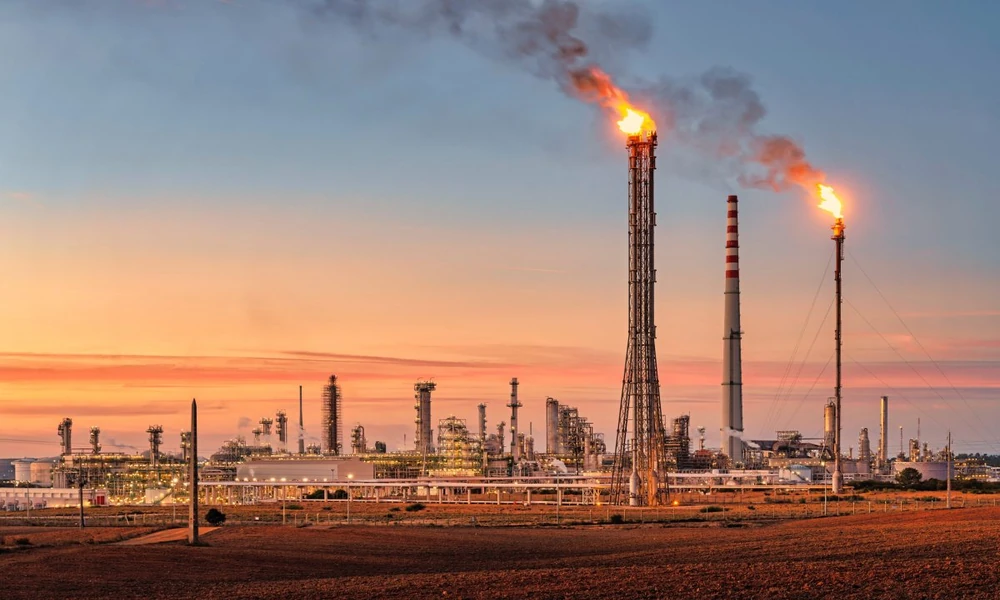
Drive past many production sites at night, and you will see tall stacks burning bright orange. That burning vapour comes up alongside crude from underground reservoirs. Operators often lack pipelines to carry it away, so they burn it on site. Meanwhile, the same location may run diesel engines to keep pumps working. A flare gas to power setup closes that gap by turning the burned stream into electricity. Understanding each step shows where this approach fits best.
What Gets Burned Off
The vapour released during crude production is called associated gas. It is mostly methane mixed with heavier compounds plus some water. Without a pipeline or buyer nearby, operators often burn it for safety. Burning prevents explosive buildup but destroys a valuable fuel source.
Scale of the Problem
Global flaring burns roughly 140 to 150 billion cubic metres every year. That volume could supply electricity for millions of homes. It also releases hundreds of millions of tonnes of carbon dioxide annually. Incomplete burning lets some methane escape too, adding to warming.
Steps From Wellhead to Electricity
The process follows a fairly simple chain of equipment. Each link prepares the stream for steady electricity output.
- Collection piping diverts vapour before it reaches the burning stack.
- Separators remove liquids that could damage downstream engine parts.
- Scrubbers strip corrosive sulphur compounds from sour incoming streams.
- Compressors raise pressure, so feed enters machinery at steady rates.
- Specialised engines or turbines burn the treated fuel efficiently.
- Generators convert mechanical motion into electricity for site loads.
- Control systems balance output when supply volumes rise or fall.
- Surplus electricity can feed nearby grids where connections exist.
Cleaning the Raw Stream
Raw associated vapour varies widely between wells. Some streams contain hydrogen sulphide, which corrodes engines quickly. Others carry heavy compounds that cause rough running inside cylinders. Proper treatment protects equipment plus keeps output stable.
What Makes Projects Succeed on Remote Production Sites?
Steady supply volume matters most. Wells decline over time, so output plans must allow for falling flow. Modular units help because they can be added or removed easily. Containerised systems also suit locations far from towns.
Local demand shapes the economics too. A flare gas to power project pays off fastest when it replaces expensive trucked diesel. Pumps, compressors plus worker camps often use most of the electricity. Experienced partners handle testing, design plus ongoing maintenance. Monitoring tools track performance remotely across scattered locations. Clear contracts define responsibility when supply changes unexpectedly. Planning for decline avoids stranded equipment.
Emission Gains Worth Noting
Burning in a stack converts most methane but not all of it. Engines combust fuel more completely under controlled conditions. Replacing diesel generators also cuts separate exhaust emissions on site.
Burning Versus Capturing Compared
| Factor | Routine Flaring | Capture for Electricity |
|---|---|---|
| Fuel value | Lost entirely | Converted into site electricity |
| Diesel purchases | Still needed for site loads | Reduced or eliminated |
| Methane slip | Higher when stacks burn poorly | Lower under controlled combustion |
| Upfront cost | Minimal | Moderate equipment investment |
| Regulatory pressure | Rising in many countries | Helps meet reduction targets |
| Visibility | Flames seen for kilometres | Contained inside equipment enclosures |
Upfront cost is the only row where flaring looks cheaper. Over a project’s life, fuel savings usually outweigh that early spending.
Doubts Operators Commonly Raise
· Does every well produce enough vapour for electricity? No, small or declining wells may not justify equipment costs.
· What happens when supply drops suddenly? Backup diesel or battery systems usually cover short gaps.
· Can sour streams be used safely? Yes, after treatment removes corrosive sulphur compounds.
· How quickly can a system be installed? Containerised units can often be deployed within weeks.
· Does this eliminate flaring? Not always, since safety flares remain for emergencies.
· Who typically owns the equipment? Many operators rent units, avoiding large upfront purchases.
Turning Losses into Output
Associated vapour no longer needs to disappear into the sky. Treatment, compression plus engines convert it into reliable electricity. Diesel purchases fall while emissions drop. Success depends mostly on matching equipment to changing supply.
Steady Operation Outlasts Perfect Designs
Capturing this resource rewards patience rather than flashy engineering. Regular testing of incoming flow reveals decline before it causes outages. Small adjustments to equipment keep output matched to real supply. Scheduled maintenance prevents breakdowns on remote wells. Consistent follow-through will deliver more value than any flawless blueprint.