
Key Takeaways
- A solar PPA allows businesses to access solar energy without upfront capital investment.
- Retail businesses benefit from cost predictability and brand alignment with sustainability goals.
- Industrial users typically achieve higher financial returns due to larger energy consumption.
- Suitability depends on load profile, roof space, and operational patterns.
- Both sectors can reduce reliance on grid-based electricity in Singapore through solar PPA arrangements.
Introduction
Rising electricity in Singapore continues to push businesses to explore alternative energy strategies that reduce long-term costs without heavy upfront investment. One increasingly adopted model is the solar power purchase agreement (PPA), where a third-party provider installs and maintains a solar system while the business pays only for the electricity generated. While this model is applicable across sectors, the level of benefit varies significantly between retail and industrial users. Comprehending how each sector consumes energy and utilises space is key to determining who gains more from a solar PPA arrangement.
Retail Businesses
Retail businesses typically operate on fixed hours with predictable energy consumption patterns. Shopping malls, supermarkets, and standalone stores rely heavily on lighting, air conditioning, and point-of-sale systems during peak daytime hours. This approach aligns well with solar generation, which occurs during daylight, making a solar PPA a practical way to offset daytime electricity without operational disruption.
One of the main advantages for retail operators is cost predictability. A solar PPA locks in electricity rates over a long-term contract, protecting businesses from fluctuations in grid pricing. This stability simplifies budgeting and reduces exposure to volatile energy markets for retail chains managing multiple outlets. Even if the absolute savings are moderate, the ability to forecast energy costs accurately is often more valuable for financial planning.
Another key factor is brand positioning. Retail businesses are customer-facing, and sustainability initiatives are increasingly tied to brand perception. Adopting a solar PPA allows retailers to communicate measurable environmental efforts without capital expenditure. Rooftop solar installations on malls or outlets can be integrated into marketing narratives, reinforcing corporate responsibility messaging while still addressing operational needs tied to electricity.
However, retail properties may face limitations in roof space, especially in leased premises. Shopping centres often have shared infrastructure, meaning tenants cannot directly install solar systems. Benefits, in such cases, depend on landlord participation, which can limit scalability across multiple locations.
Industrial Facilities
Industrial users, including factories, warehouses, and logistics hubs, generally consume significantly more energy than retail businesses. Their operations often run for extended hours or even continuously, with heavy machinery, production lines, and climate control systems driving demand. This high and consistent consumption makes industrial facilities particularly well-suited for solar PPA models.
The primary advantage for industrial users is the scale of savings. Since they consume large volumes of electricity, even a modest reduction in per-unit cost translates into substantial financial impact over time. A solar PPA can offset a significant portion of daytime energy demand, directly lowering operational expenses without requiring capital investment.
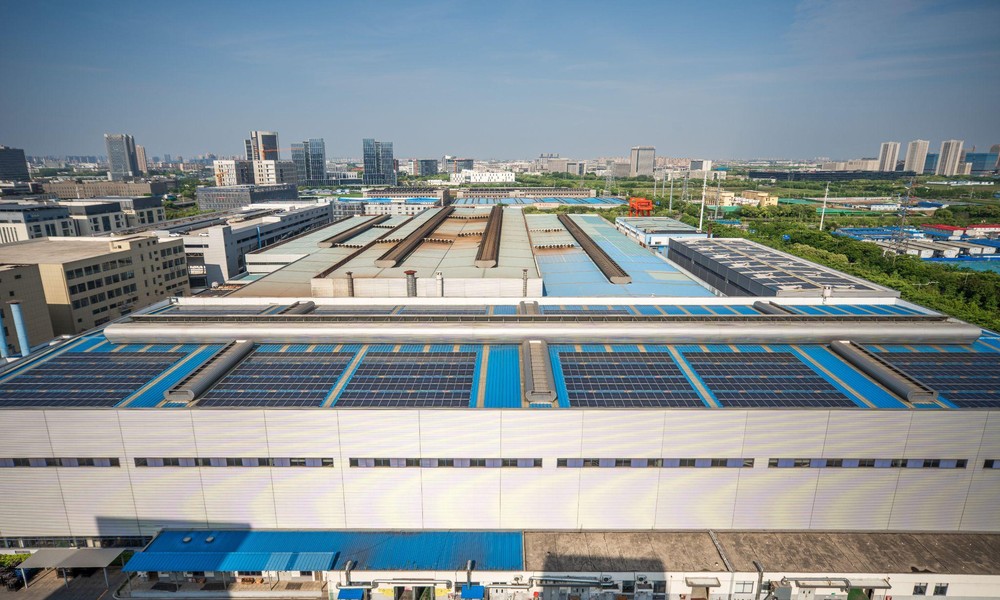
Industrial sites also tend to have larger roof areas, making them more suitable for solar installations. Warehouses and factories typically offer expansive, unobstructed rooftops that maximise solar generation capacity. This quality allows solar PPA providers to install larger systems, increasing the proportion of energy supplied through solar and improving overall returns.
Another benefit is operational alignment. Many industrial processes run during daylight hours, which coincides with peak solar production. This approach reduces reliance on grid electricity during the most expensive periods, further enhancing cost efficiency. In addition, long-term contracts associated with a solar PPA align well with industrial planning cycles, where facilities are designed for extended use and stable operations.
The main limitation lies in operational variability. Facilities with fluctuating production schedules or seasonal demand may not fully utilise generated solar energy, reducing potential savings. Still, compared to retail, industrial users generally achieve stronger financial outcomes due to scale and infrastructure advantages.
Conclusion
Both retail and industrial sectors can benefit from a solar PPA, but the extent and nature of those benefits differ. Retail businesses gain from cost predictability and brand alignment, making solar adoption a strategic decision beyond pure financial return. In contrast, industrial facilities typically achieve greater direct savings due to higher energy consumption, larger installation capacity, and better alignment with solar generation patterns.
However, in the context of rising electricity prices, the question is less about whether a solar PPA works and more about how effectively it integrates with business operations. That said, for retailers, it is a stability and branding tool. Meanwhile, for industrial users, it is a cost optimisation strategy with a measurable financial impact.
Contact Flo Energy Singapore and stop letting rising electricity costs dictate your margins.